

Infectious bronchitis (IB) is a widespread and recurring respiratory disease that continues to challenge the global poultry industry. It affects all types of poultry—layers, breeders, and broilers—and leads to significant economic losses across the production chain, from farms to slaughterhouses.
One of the most effective ways to prevent IB outbreaks is through hatchery vaccination. Administering vaccines at day one ensures early protection and helps reduce the spread of the virus before it can take hold.
Why Vaccinate Against Infectious Bronchitis?
IB is often misdiagnosed due to its similarity to other respiratory, reproductive, or urinary infections. However, its impact is far-reaching. A common consequence is airsacculitis—an inflammation of the air sacs in live chickens resulting in the accumulation of purulent or caseous material within the air sac cavity. This condition can lead to a reduction in slaughterhouse processing speed due to the need to dispose of the infected tissue, which is unsuitable for human consumption. 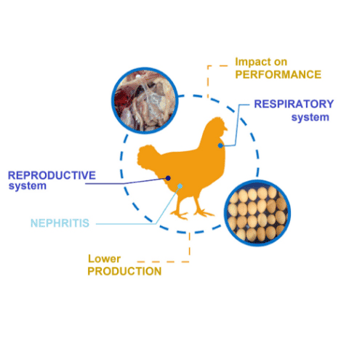
In severe cases, entire carcasses must be discarded, resulting in further financial loss.
With new IB variants emerging regularly, it is more important than ever to implement a comprehensive vaccination strategy. Early, consistent, and properly administered immunization remains the cornerstone of effective disease control in poultry operations.
Spray vaccination at the hatchery
Chick vaccination programs are currently implemented using advanced technology machines, such as in-line or cabinet sprayers for spray vaccination. These machines are commonly used to administer a precise dose of live respiratory vaccine to day-old chicks at hatcheries, within a controlled environment that facilitates high-speed vaccination. Prior to this final administration step, which itself necessitates a high level of expertise regarding technical equipment settings (including air pressure, nozzle spray pattern, volume delivered per nozzle, crate coverage, and room humidity) and maintenance, the process begins with the preparation of the vaccine solution.

Freeze-dried vaccine reconstitution
Poultry vaccine manufacturers provide various vaccines to control poultry diseases. Live-attenuated infectious bronchitis vaccines come in lyophilized (freeze-dried) vials, which are mixed with a diluent before use. For spray vaccination, water is used as the diluent.
Distilled water for vaccine viability
However, only specific types of water are suitable for vaccines. Water's mineralization, pH, and microbiological load affect vaccine viability. Chlorinated water, for example, reduces the vaccine virus's effectiveness. For spray vaccination, distilled water is recommended, though low-mineralized water is also acceptable (see table below).
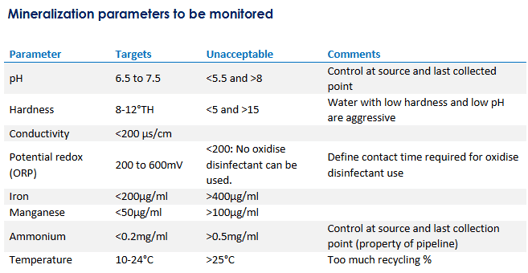
Source : Ceva C.H.I.C.K program SOP
Water temperature and vaccine integrity
Besides those criteria, water temperature is another critical parameter to consider. The influence of the temperature of the water used to reconstitute the vaccine has been demonstrated by J.J. De Wit in a published article about the efficacy of infectious bronchitis virus vaccinations. Showing, like a previous publication from Cavanagh & Gelb, the susceptibility of infectious bronchitis vaccine to high temperatures. The recommendation is to use water from 8 to 25°C (46-77°F).
Once the water quality is under control, the vaccine can be reconstituted following standard operating procedures. Ideally just before application, and up to 1 hour.
C.H.I.C.K program: hatchery vaccination at your service
Current studies and reports in poultry magazines indicate that despite advancements over the past decade, including innovative vaccines produced by poultry vaccine manufacturers and chick vaccination machines, the industry continues to experience infectious bronchitis outbreaks. This suggests challenges in achieving consistent and effective vaccination of chicks, likely due to the numerous factors involved in reconstituting and administering poultry vaccines.
The C.H.I.C.K program (standing for Ceva Hatchery Immunization Control Keys) service is deployed globally and quality recognized by Bureau Veritas. Homogeneous services are provided worldwide, with experts regularly visiting hatcheries. The program ensures vaccination best-practices excellence through hatchery operators training, hatchery processes follow-up and vaccination efficiency.